
On January 26, the Ministry of Education held the 2026 Symposium for Deputies and Members, inviting some deputies to the 14th National People’s Congress (NPC) and members of the Chinese People’s Political Consultative Conference (CPPCC) for symposium and exchanges. Huai Jinpeng, Secretary of the Party Leadership Group and Minister of the Ministry of Education, attended the meeting and delivered a speech. President Qin He, an NPC Deputy, attended the symposium and spoke.
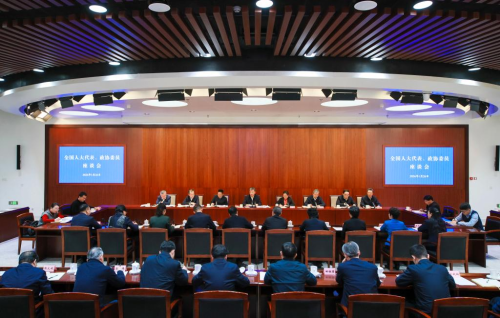
Kong Ling, Deputy Director of the Deputy Work Committee of the Standing Committee of the National People’s Congress, and Su Guiguang, Deputy Director of the Proposal Committee of the Chinese People’s Political Consultative Conference, were invited to attend the meeting. Members of the Party Leadership Group of the Ministry of Education were present at the meeting. Wang Guangyan, Member of the Party Leadership Group and Vice Minister of the Ministry of Education, presided over the meeting and introduced the handling of suggestions and proposals by the Ministry of Education in 2025. At the symposium, President Qin He and nine other deputies and members spoke in sequence.
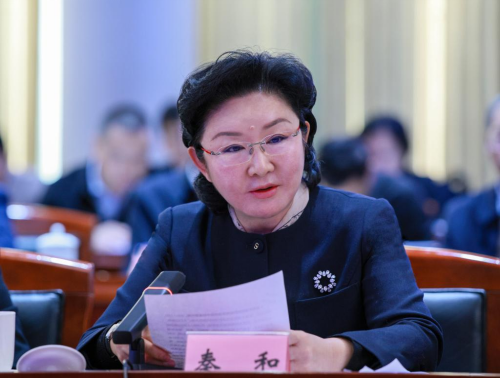
In her speech, President Qin He fully affirmed the handling of suggestions and proposals by the Ministry of Education, spoke highly of the progress and achievements in building a strong education country, and put forward opinions and suggestions on optimizing resource allocation to adapt to demographic changes: First, formulate plans tailored to local conditions, and dynamically adjust the supply of educational resources in light of regional positioning and demographic projections. Second, implement small‑class teaching, develop supporting school‑running standards, verify teacher staffing quotas, and explore reforms in talent cultivation approaches. Third, elevate the strategic status of rural education, make systematic top‑level plans, run every rural school well, and narrow the urban‑rural education gap. Fourth, advance the reform of the basic education management system integrating municipal and county governance, give full play to municipal‑level overall planning, break county‑level barriers, and boost joint development and sharing of resources. Fifth, leverage market mechanisms. On the premise of upholding public‑welfare attributes, realize dynamic balance between educational resource supply and demand via government procurement of services and resource revitalization.
Source: Publicity Department
