
On the afternoon of June 27, the graduation ceremony for the Master of Translation and Interpreting (MTI) Supervisor Training Program was held at JISU. The event was addressed by Gao Anming, editor-in-chief of China Foreign Languages Publishing Administration and executive vice president and secretary-general of the Translators Association of China, and Qin He, member of the National Committee for Master of Translation and Interpreting Education, executive vice president of the Translators Association of China, and President of JISU. The ceremony was attended by 73 translation instructors from various institutions across the country.
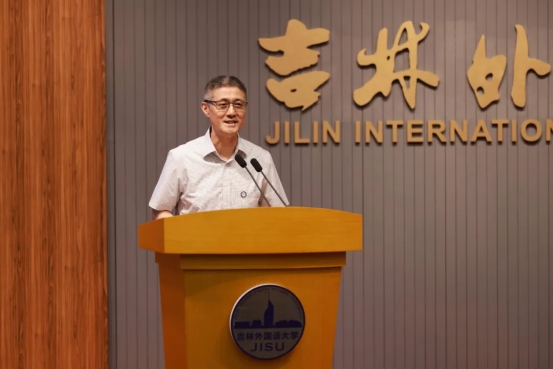
Editor-in-Chief Gao Anming emphasized the significant role of this training program in comprehensively enhancing the teaching capabilities of MTI supervisors and improving the quality and efficiency of building a robust translation workforce. He stated that the Translators Association of China will focus on the in-depth implementation of the “Translation Training Project,” bringing together resources from various stakeholders to innovate the training model for translation professionals. This initiative aims to establish an AI-era translation education system that integrates knowledge with practice and strengthens competencies through application, thereby laying a solid foundation for cultivating high-level, application-oriented translation talent. It will also provide intellectual support for enhancing China’s translation capacity and international communication capabilities.
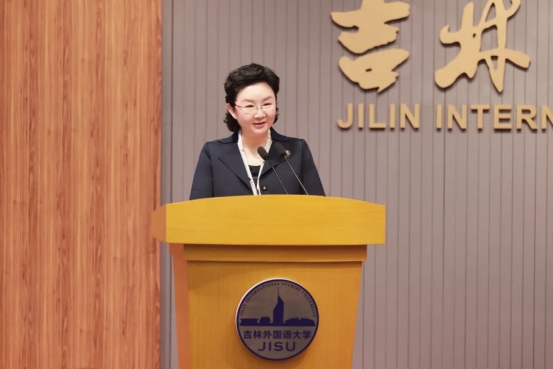
President Qin He spoke highly of the training program in her address, noting that its comprehensive content and broad perspective provide fundamental guidance for advancing translation education in the new era. She stated that the university will seize this opportunity to further deepen the reform of translation education, vigorously promote technology-enabled approaches to translation teaching, and comprehensively strengthen the development of a high-caliber faculty specialized in translation studies.
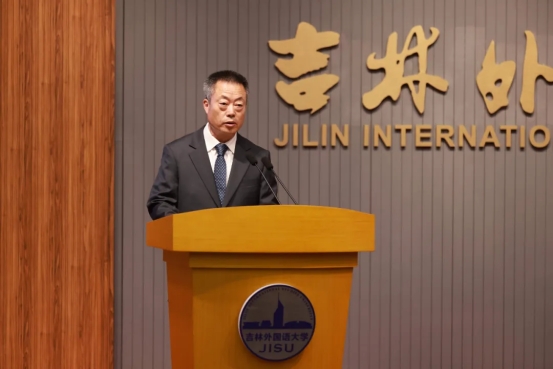
Vice president Zhang Yangzhi presided over the closing ceremony.
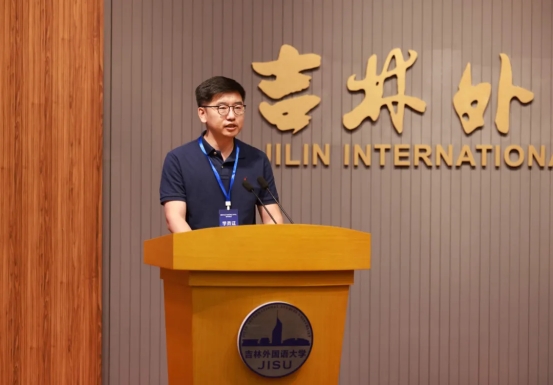
Zou Jian, Vice dean of the School of Foreign Languages at Changchun University, representing the participating supervisors, delivered a speech sharing his training experience.
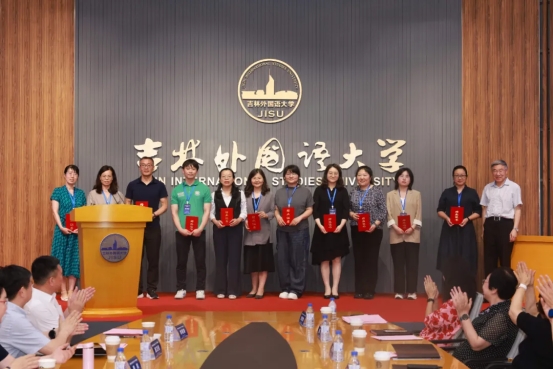
The attending leaders presented completion certificates to the participating instructors.
The training program was organized by the Translators Association of China under the guidance of the National Committee for Master of Translation and Interpreting Education, and hosted by JISU in collaboration with the Jilin Provincial Translators Association. Over the three-day program, five distinguished experts delivered intensive lectures, including Huang Youyi, executive vice president of the Translators Association of China, former vice president and editor-in-chief of China Foreign Languages Publishing Administration, and Chair of the Expert Committee of the National Committee for Master of Translation and Interpreting Education; and Zhang Ailing, dean of the Graduate Institute of Interpretation and Translation at Shanghai International Studies University and secretary-general of the National Committee for Master of Translation and Interpreting Education. The training closely aligned with the guiding principles of the General Secretary Xi Jinping’s important directives on enhancing international communication, addressing strategic national needs and cutting-edge disciplinary developments. Centering on the fundamental question of “what kind of translators should be cultivated and how to cultivate them” in the context of “the overall domestic and international situations,” the program provided in-depth insights into critical contemporary issues such as the construction of international discourse, reforms in translator training in the AI era, and the cultivation of interdisciplinary talents for international communication.
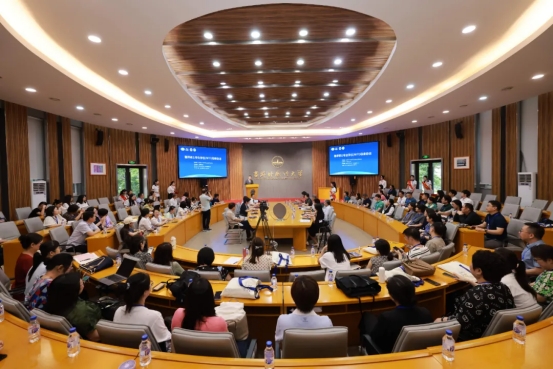
The participating supervisors unanimously acknowledged that the experts had delivered an intellectual feast by delving into cutting-edge topics such as cultivating talent for international communication in the era of intelligent voice technology, advancing innovation in translation theory, enhancing practical translation pedagogy, leveraging intelligent language technologies, and interpreting the newly enacted Academic Degrees Law of the People’s Republic of China. They expressed commitment to consolidating the insights gained from the training and further refining their ability to guide graduate students, vowing to contribute more substantially to nurturing a new generation of high-level translation professionals who are proficient in language technology, well-versed in international norms, and deeply rooted in national spirit.
